
Information in this document and in documents associated with other PARIS Technologies Training materials is subject to change without notice, and does not represent a commitment on the part of PARIS Technologies. No part of this manual may be reproduced or transmitted in any form, or by any means whatsoever, without the written permission of PARIS Technologies International, Inc.
© Copyright 2026 PARIS Technologies International, Inc.
Windows is a trademark of the Microsoft Corporation.
Microsoft Excel is a trademark of the Microsoft Development Corporation.

Table of Contents
- 1. OLATION® Version 26 — System Requirements and Recommendations
- 2. Installing OLATION®
- 3. Registering the OLATION® License
- 4. OLATION® Web Services Install
- 5. Uninstalling OLATION®
- 6. SQL Configuration for Database Access in OLATION®
OLATION® Installation Guide
1. OLATION® Version 26 — System Requirements and Recommendations
OLATION is an in-memory OLAP engine. Performance depends primarily on the speed of each logical processor and sufficient physical memory for active databases and calculations. Additional processors can be utilized where permitted by the OLATION license.
OLATION® Server — Professional and Enterprise Editions
| Component | Minimum — Small Applications | Recommended — Production | Larger Applications |
|---|---|---|---|
| Processor | Modern x64 processor; 2 cores or vCPUs | 4 high-performance cores or vCPUs | 8 or more high-performance cores or vCPUs, subject to licensing |
| Memory | 16 GB RAM | 32 GB RAM | 64–128 GB RAM or more, based on application requirements |
| Storage | SSD with 120 GB free | SSD or NVMe with 200 GB free | SSD or NVMe sized for data, processing, logs, and backups |
| Operating system | Windows Server 2022, x64 | Windows Server 2025, x64 | Windows Server 2025, x64 |
| Runtime | Microsoft .NET Framework 4.8 or 4.8.1, as supported by the deployed OLATION release | Same | Same |
A dedicated physical server or virtual machine is recommended for production deployments. IIS and applicable ASP.NET features are required when deploying OLATION Web Services. SQL Server, where required, must be sized for its additional resource requirements.
OLATION® Studio
| Component | Minimum | Recommended |
|---|---|---|
| Processor | Modern x64 processor; 2 cores | 4 or more cores with strong single-thread performance |
| Memory | 8 GB RAM | 16 GB RAM |
| Storage | SSD with 10 GB available | SSD with 20 GB available |
| Operating system | Windows 11, x64 | Windows 11 Pro or Enterprise, x64 |
| Runtime | Microsoft .NET Framework 4.8 or 4.8.1, as supported by the deployed OLATION release | Same |
These specifications assume Studio connects to a separate OLATION Server. Workstations hosting OLATION Server require additional resources.
PowerExcel® Workstation
| Component | Basic Workstation | Recommended |
|---|---|---|
| Processor | Modern processor; 2 cores | 4 or more cores with strong single-thread performance |
| Memory | 8 GB RAM | 16 GB RAM; 32 GB for large workbooks or extensive multitasking |
| Storage | Sufficient space for installation and Excel workbooks | SSD with sufficient space for installation and Excel workbooks |
| Operating system | Windows 10 | Windows 11 Pro or Enterprise |
| Microsoft Excel | Excel 2016 or newer | A currently supported desktop version of Excel, including Microsoft 365 |
The Excel version and Office bitness must be compatible with the installed PowerExcel release.
Sizing and Performance Guidelines
- Processor: Prioritize sustained single-thread performance. Processor generation and architecture matter; GHz and core count alone do not determine performance.
- Memory: Provide sufficient RAM for all active OLATION databases, peak calculation and processing activity, the operating system, and other installed services. Allow additional capacity for growth.
- Storage: Size storage for application data, temporary processing files, logs, and backup retention. SSD or NVMe storage improves loading, saving, and processing performance.
- Virtualization: Allocate consistently available CPU and memory resources. Avoid resource contention and reliance on burst capacity for sustained production workloads.
Each environment is unique. Minimum specifications are intended for small applications and evaluation. Final sizing should consider model complexity, data volume, concurrent activity, and integrations. PARIS Technologies recommends reviewing application requirements before selecting hardware or a cloud configuration.
Publication note: Confirm the OLATION release compatibility matrix for the listed Windows Server, Windows 11, and .NET Framework combinations before publishing.
2. Installing OLATION®
IMPORTANT: The user must be logged in with administrator rights or its equivalent to install OLATION®.
PRE-INSTALL REMINDERS:
BEFORE YOU BEGIN, PLEASE READ.
Before installing, make sure that the OLATION® and the PowerOLAP® applications are closed.
You can opt to stop OLATION and PowerOLAP services in the Task Manager to avoid restarting your computer after installing.
When upgrading to a newer version of OLATION®, you do NOT need to uninstall your current version.
To install OLATION®:
Locate and run the Setup installation file for OLATION®. This initializes the OLATION InstallShield Wizard.
Important: The user must run the application as an administrator. To do this, right-click on the setup.exe installation file and select the Run as Administrator option.

To continue with the installation, click Next.
In the Customer Information screen, specify the username and company name, and click Next.
The License Agreement screen appears next. Accept the agreement and click Next.

The Maintenance Agreement screen appears next. Accept the agreement and click Next.

The subsequent screen allows the user to select the setup type for the OLATION® installation. Select to install either the OLATION® Server or the OLATION® Studio, or select the Complete option, which installs both the Server and the Studio.
In the next screen, select Install to trigger the installation process.
To modify any previous configuration for the installation, click on the Back button to return to the previous Install Wizard screens.
Once the installation has successfully completed, click on the Finish button to exit the wizard.
This completes the OLATION® installation.
In order to activate the OLATION® software, call or contact PARISTech support after installing and provide them with the codes OLATION® generates on your computer machine. PARISTech support then provides you with license codes to register the OLATION® software.
3. Registering the OLATION® License
After installing OLATION®, the next step is to register the license of either the OLATION® Studio or the OLATION® Server.
IMPORTANT: You can only register once for both OLATION® Studio and OLATION® Server licenses. If you have registered the license for OLATION® Studio, your OLATION® Server license is considered registered
There are two options to register the OLATION License:
Register the OLATION License Online
Register the OLATION License by Browser
3.1. Register the OLATION® License Online
This section covers the steps for Online License Registration of the OLATION® Studio and OLATION® Server.
The Product Key or License ID is not required for installing the software, but after the installation, you need to activate the software using a valid License ID and Password. This activates the product feature and allows for permanent use of the software.
3.1.1. Register the OLATION® Studio License Online
To register the OLATION® Studio License Online:
Launch OLATION®.
Important: The user must run the application as an administrator. To do this, right-click on the OLATION icon and select the Run as Administrator option.
Right-click on Local Databases in the Database Explorer and click the Licensing option.
This displays the Licensing dialog box.

Click on the License button found at bottom of the screen. This brings up the Register dialog box.

Enter the License Number and the Password, which are provided by PARIS Technologies.
Once the keys are entered, click the Register Online button.
You are re-directed back to the Licensing dialog box.
You should now see the features enabled in your OLATION® software as well as other licensing information.
Click the Close button.
This completes the OLATION® Studio license registration.
3.1.2. Register the OLATION® Server License Online
IMPORTANT: The following sub-topics assume internet connectivity for the machines on which you perform the OLATION registration.
If you have successfully registered the OLATION® Studio in the previous section, you can skip performing this section.
IMPORTANT: When registering the OLATION® Server, make sure to start the OLATION Service. Go to the Task Manager, click the Services tab, and start the OLATION service.
First, we need to register the OLATION® Server to add the server to the servers list. To add the OLATION® Server to the servers list:
Launch OLATION®.
Important: The user must run the application as an administrator. To do this, right-click on the OLATION icon and select the Run as Administrator option.
In the Database Explorer, right-click on Servers and click Register Server. This displays the Register New Server dialog box.

Enter the Display Name.
Enter the server name in the Server field. When adding a local server,enter "localhost" as the server name.
Enable the Secure Connection option by clicking the checkbox. However, in this instance, leave the box unchecked.
Click OK.
Expanding Servers shows localhost under it.
After registering the local server, you can now register the OLATION® Server.
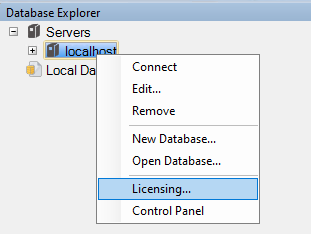
Right-click on localhost under Servers in the Database Explorer and click the Licensing option.
This displays the Licensing dialog box.

Click the License button.
This displays the Register dialog box.

Enter the License Number and the Password provided by PARIS Technologies. Make sure to use the correct license number and password assigned for the OLATION® Server.
Once the keys are entered, click the Register Online button.
Back in the Licensing dialog box, you should now see the features enabled in the OLATION® software as well as other licensing info
Click Close.
This completes the OLATION® Server license registration.
3.2. Register the OLATION® License by Browser
This section covers the steps for License Registration via Browser of the OLATION® Studio and OLATION® Server.
The Product Key or License ID is not required for installing the software, but after the installation, you need to activate the software using a valid License ID and Password. This activates the product feature and allows for permanent use of the software.
3.2.1. Register the OLATION® Studio by Browser
To register the OLATION® Studio License by Browser:
Launch OLATION®.
Important: The user must run the application as an administrator. To do this, right-click on the OLATION icon and select the Run as Administrator option.
Right-click on Local Databases in the Database Explorer and click the Licensing option.
In the Licensing dialog box, click on the License button.
In the Register dialog box, enter the License Number and the Password, which are provided by PARIS Technologies.
Once entered, click the Register By Browser button.

You are directed to a web page containing the Registration Code and License Features, which are needed to enter back in the Register dialog box.
Another section appears in the Register dialog box called Manual Registration Codes, where you enter the Registration Code and License Features in their appropriate fields.
Once entered, click the Register Manually button.
Back in the Licensing dialog box, you should now see the features enabled in the OLATION® software as well as other licensing info.
This completes the OLATION® Studio license registration.
3.2.2. Register the OLATION® Server License by Browser
IMPORTANT: The following sub-topics assume internet connectivity for the machines on which you perform the OLATION registration.
If you have successfully registered the OLATION® Studio in the previous section, you can skip performing this section.
IMPORTANT: When registering the OLATION® Server, make sure to start the OLATION Service. Go to the Task Manager, click the Services tab, and start the OLATION service.
IMPORTANT: The initial steps for this procedure are the same as those indicated for the topic, Registering the OLATION® Server License Online.
First, we need to register the OLATION® Server to add the server to the servers list. To add the OLATION® Server to the servers list:
Launch OLATION®.
Important: The user must run the application as an administrator. To do this, right-click on the OLATION icon and select the Run as Administrator option.
In the Database Explorer, right-click on Servers and click Register Server. This displays the Register New Server dialog box.

Enter the Display Name.
Enter the server name in the Server field. When adding a local server,enter "localhost" as the server name.
Enable the Secure Connection option by clicking the checkbox. However, in this instance, leave the box unchecked.
Click OK.
Expanding Servers shows localhost under it.
After registering the local server, you can now register the OLATION® Server.
Right-click on localhost under Servers in the Database Explorer and click the Licensing option. This displays the Licensing dialog box.

Click the License button.
This displays the Register dialog box.
Enter the License Number and the Password provided by PARIS Technologies. Make sure to use the correct license number and password assigned for the OLATION® Server.
Once entered, click the Register by Browser button.

You are directed to a web page containing the Registration Code and License Features, which are needed to enter back in the Register dialog box.
Another section appears in the Register dialog box called Manual Registration Codes, where you need to enter the Registration Code and License Features in their appropriate fields.
Once entered, click the Register Manually button.
Back in the Licensing dialog box, you should now see the features enabled in the OLATION® software as well as other licensing info.
This completes the OLATION® Server license registration by browser.
4. OLATION® Web Services Install
NOTE:IIS (Internet Information Services) must be installed/activated.
To install the OLATION Web Services:
Locate and run the Setup installation file for OLATION Web Services.
Important: The user must run the application as an administrator. To do this, right-click on the setup.exe installation file and select the Run as Administrator option.

This initializes the OLATION Web Services InstallShield Wizard.

To continue with the installation, click Next.
The License Agreement screen appears next. Accept the agreement and click Next.

The Maintenance Agreement screen appears next. Accept the agreement and click Next.

Select the features you want to install.

In the next screen, choose the Destination Location where you want to save your files and click Next.
In the next screen, select Install to trigger the installation process.
To modify any previous configuration for the installation, click on the Back button to return to the previous Install Wizard screens.
Once the installation has successfully completed, click on the Finish button to exit the wizard.
Next, it is recommended you Restart the IIS (Internet Information Services) Server and the site:
OlationWebService successively. To do so
[NOTE: the successive images appear on the next page]:
Open IIS from your Windows Start button.
Select the Server name on the left, under Connections; click Restart top right, under Actions/Manage ServerExpand under Connections to find the site OlationWebService; click Restart, middle right, under Manage Website
This completes the OLATION® Web Services installation.
5. Uninstalling OLATION®
To uninstall the OLATION® software, follow these steps:
Go to Control Panel, click on Programs and then click on Programs and Features.
Locate the Olation program in the list, right-click and select Uninstall.
Check the location where the Olation folder and corresponding files are saved. Make sure to completely remove all files.
6. SQL Configuration for Database Access in OLATION®
If the database takes long to become available, you might have not set the SQL Server configuration correctly.
In order for the database access in OLATION® to respond promptly, follow these steps to configure SQL Server for OLATION®:
Press Windows + R and type cmd (This will bring up the command prompt).

Type “C:\Windows\SysWOW64\SQLServerManager15.msc” into the command prompt and press enter (For SQL Server 2019).
Please select Yes for the User Account Control Prompt (This will bring up the SQL Server Configuration Manager).

Under:
- SQL Native Client 11.0 Configuration (32bit)
- SQL Server Network Configuration
- SQL Native Client 11.0 Configuration
The Client Protocols and Protocols need to be set as follows:
- Shared Memory: Disabled
- TCP/IP: Enabled
- Named Pipes: Enabled

SQL Native Client 11.0 Configuration (32bit)

SQL Server Network Configuration

SQL Native Client 11.0 Configuration
Restart SQL Server Service.

Restart Olation Services.